
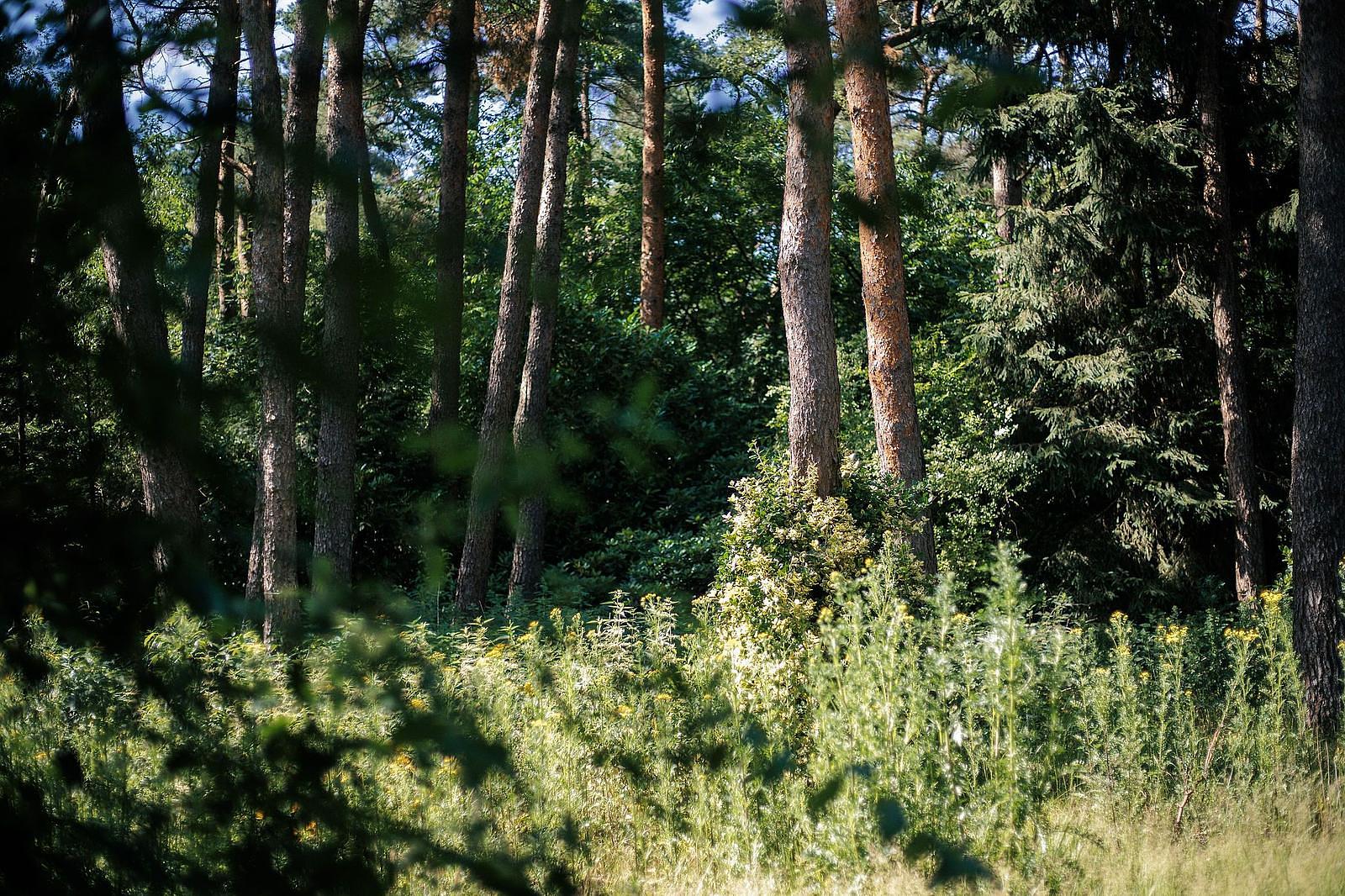
The Nature Experience Forest
In the Nature Experience Forest, we give a small part of our surroundings back to nature. Here, the forest is given the space to develop at its own pace. We mow the trails from time to time. Other than that, we leave the vegetation alone as much as possible. While out on a walk, you can see what happens when nature is given more freedom.
In the Nature Experience Forest, we give a small part of our surroundings back to nature. Here, the forest is given the space to develop at its own pace. We mow the trails from time to time. Other than that, we leave the vegetation alone as much as possible. On a walk, you can see what happens when nature is given more freedom.
Intervene Less and Let Things Happen Naturally
Off the trails, the vegetation is given the chance to grow, bloom, and die off again. Leaves remain part of the forest's cycle. They break down slowly, releasing nutrients back into the soil. Insects, fungi, and other small organisms play an important role in this process.
Fallen branches and dead wood also have value. They provide habitat and shelter, and over time, they become part of the soil again. This is how a forest is constantly changing, even in places where, at first glance, you don't see much activity.


Between the oak trees
There are many oak trees in the Nature Experience Forest. As you walk, take a look at the tree trunks and the space beneath the branches. A tree is part of a larger whole: animals seek food and shelter there, while other plants grow beneath it. Light, shade, and moisture all play a role in determining what can grow in each location.
A forest that continues to evolve
If we intervene only minimally, the composition of the vegetation can change gradually. Young trees grow and provide new shade. In areas with more light, other plants get a chance to grow. Which species establish themselves depends, among other things, on the soil, the amount of light, and the seeds that reach the forest.
Native plants do not automatically replace non-native plants in this process. Non-native species can also continue to grow or spread. Take the well-known rhododendron, for example. The development of a forest does not have a predetermined outcome. It is precisely by observing quietly that you discover how life here changes throughout the seasons.
Be sure to check out the beehive, too
The Nature Experience Forest is home to an apiary with six colonies, tended by our beekeeper. Take a walk along the trails, look at the greenery around you, and take a moment to listen. This is how you can enjoy the forest without disturbing it.